Ironworker Chris Scattone remembers walking slowly to the edge of the 63rd story of the skyscraper he was helping to build and imagining his own funeral. He remembers the orange glow from a nearby copper rooftop in lower Manhattan, and how his T-shirt was spattered with blood after he shot heroin that morning. He was homeless, severely underweight and convinced life was not worth living.
A coworker – a union brother – noticed him, grabbed his harness and asked if he was OK.
“Somehow I ended up in the middle of the floor, and I remember being in a fetal position, and it was the first time I ever cried for help in my whole life. I remember looking at him and saying, ‘I don’t want to die, and I need help,’” Scattone said. His coworker connected him to union support that helped him get into rehab.
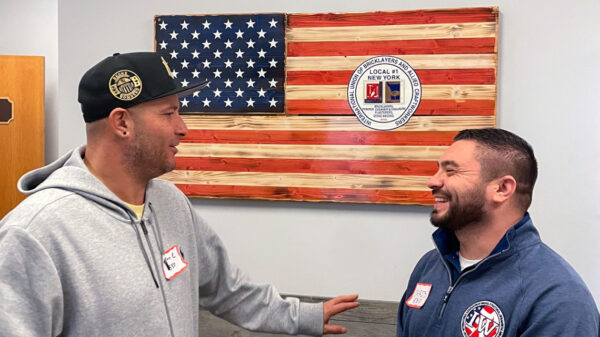
“What Cornell is doing is a form of action,” said Scattone, now member assistance program director at the Ornamental and Architectural Ironworkers Union Local 580. “It’s not another slogan, it’s not another poster, it’s not another help line to call,” he said. “It’s an in-person action and I respect it, because it’s saying it’s OK to ask for help, and that’s what they’re providing.”
The program, the Building Trades Peer Support Network, includes a two-hour training, “It’s Not Weak to Speak.” Another component trains union members to be on-site peer supporters who listen to troubled coworkers, assess the risk of their mental health and refer them to appropriate support.
The construction industry has one of the highest suicide rates of any industry in the country, second only to mining, according the Centers for Disease Control and Prevention. And construction workers die of drug overdoses at a greater rate than workers in any other industry, according to the CDC.