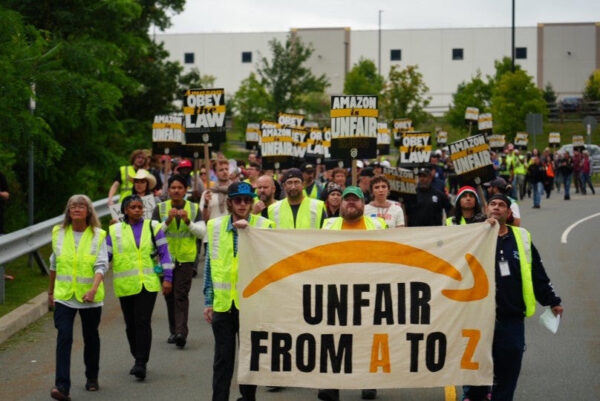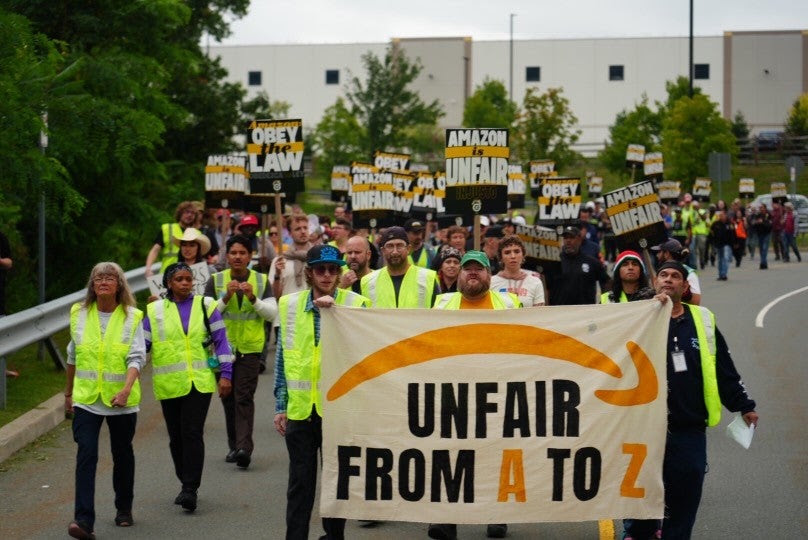
Workers today are experiencing a technological, political and economic transformation of a scale not seen in at least a century, one bound to profoundly reconfigure our relationship with capital and power. If we want that reconfiguration to go in the favor of American workers, unions must aggressively stay ahead of the changes and seize the moment by being adaptable, uplifting workers’ voices and mobilizing behind a clear set of moral principles.
Due to the combination of our history, our diverse membership and our structure, I believe no one is more equipped to lead this charge than the Office and Professional Employees International Union (OPEIU), AFL-CIO.
When I became the president of OPEIU last year, I knew it was more than an opportunity to secure strong contracts for 90,000-plus Americans working in practically every industry. It was also one to ensure American workers leave this profound transformation with a greater share of the country’s wealth than they had before.
Since OPEIU’s founding, we have been able to adapt our organizing and bargaining to the constantly evolving needs of American workers because of our trademark structure empowering members to be the primary decisionmakers, allowing local unions to guide organizing and embracing every worker eager to unionize.
Unions must go all in on this model if they want to be well-positioned to respond to the needs of American workers in this developing economy, where the pretense of corporate responsibility has gone out the window and technology is used to extract as much labor from us for as little compensation as possible. OPEIU members have already successfully organized for AI protections in their contracts, against new forms of outsourcing and in industries previously beyond the purview of organized labor.
This strength derives from our origins organizing typists, bookkeepers and secretaries in 1906 — a unique feat in an era when unions were still largely viewed as guilds of workers in a specific occupation united by a unique skillset. Industrialism was exploding in the United States, and OPEIU’s founders saw the structure of our economy was changing with it, creating corporations with hordes of office workers.
At the same time, they saw a changing labor force that included women in unprecedented numbers and millions of new immigrants, as well as a growing willingness to militantly demand safety, equality and dignity in the workplace. Today, a majority of OPEIU members are women, and we see time and time again that working women are leading the way toward union representation in workplaces across the U.S.
By the time the AFL issued OPEIU its charter in 1945, we had already grown into a national movement of office workers in diverse industries like manufacturing, utilities and unions, and were winning contracts previous generations would have never considered possible or necessary.
Today, the United States is in the throes of a shift that echoes the changes of the early 20th century. Seeing this coming, OPEIU learned how to organize remote workplaces, protect workers against yet-to-come technology and stand up to authoritarianism. As a result, we continue to grow our power in industries slated to become more central to the American economy, like healthcare, tech and higher education.
Take our recent victory at Kickstarter, the first union at a major U.S. tech company, where OPEIU members just ratified a new contract that includes strong protections against AI and a permanent four-day workweek. The organizing and bargaining all took place virtually and resulted in clauses that respond proactively to emerging technologies. They also push expectations forward for the quality-of-life workers deserve and will set standards for future contracts at other companies.
This is just one example of how OPEIU’s model, one that exists to empower our local unions — rather than simply guide them — leads to innovative wins in modern workplaces. The same trait has recently brought us success fighting healthcare conglomerates across the country, organizing underorganized industries like credit unions and unionizing one of the world’s largest nonprofits, the International Rescue Committee. Our dynamic model enables us to be the best union for workers who never considered a union possible in their workplace.
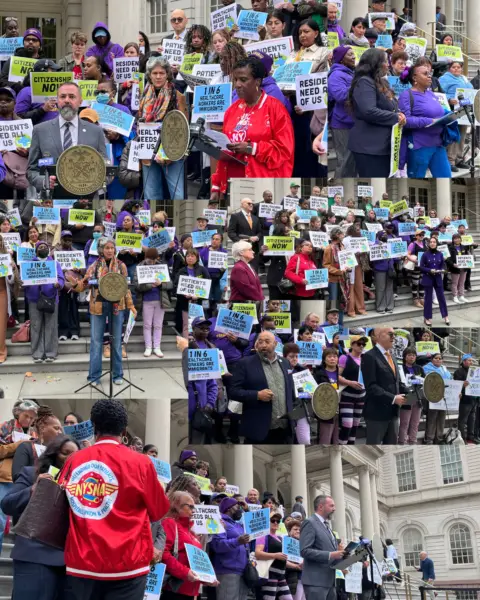
But in my view, the biggest indicator of this model’s success is the diverse and engaged membership it has built, which strongly positions us to take our organizing beyond the shop floor. It enables our members and local leaders to speak credibly on topics ranging from the economy to immigration, technology to healthcare and education to climate change.
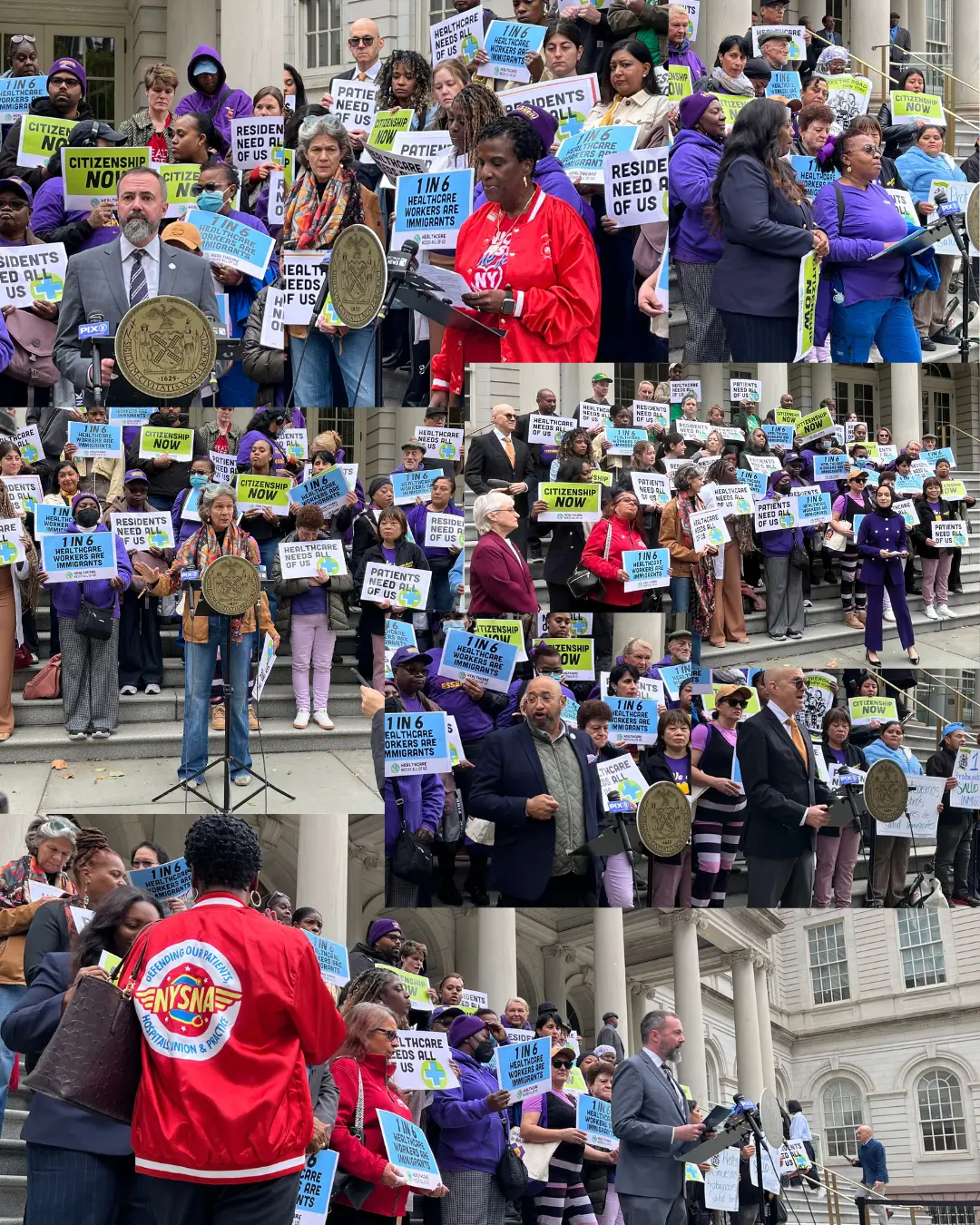
Immigrants and women, healthcare workers and coders, union diehards and those unexposed to the benefits of a union — these are the faces of the modern American workforce, and these are the people who guide every decision OPEIU makes. Coupled with a robust education program, the diversity of industry and identity our members embody ensure we are ready to mobilize at a moment’s notice.
Our commitment to uplifting our members is why workers at the Ohio coffee shop chain Rising Star, administrative staff at Sesame Workshop and nurses in Hawai’i are all choosing to unionize with OPEIU. Amid social, economic and political upheaval, OPEIU’s members are becoming increasingly equipped to fight for their rights in the workplace and in their communities across the country. That sentiment embodies both the history and the future of OPEIU.
The Office and Professional Employees International Union (OPEIU), AFL-CIO, represents approximately 93,000 working people throughout the United States and Canada. Representing employees in nonprofit organizations, tech, hospitals, hotels, credit unions, insurance agencies, colleges and universities, administrative offices and more, OPEIU is committed to advancing economic justice for working people no matter their occupation. Professional organizations and guilds affiliated with OPEIU are a diverse group that includes podiatrists, teachers, registered nurses and helicopter pilots. OPEIU is an affiliate of the 15-million-member strong AFL-CIO.