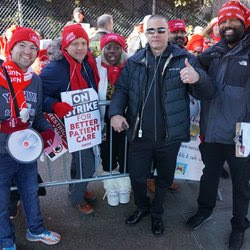
New York, NY – Local 100 President John V. Chiarello and other top officers joined strikes held by 15,000 members of the New York State Nurses Association (NYSNA) against major NYC hospitals over issues of workplace safety, adequate levels of staffing and healthcare for the nurses.
The Greater New York Hospital Association – the trade group for the private hospitals – has already spent $100 million on replacement workers, GNYHA head Kevin Raske said.
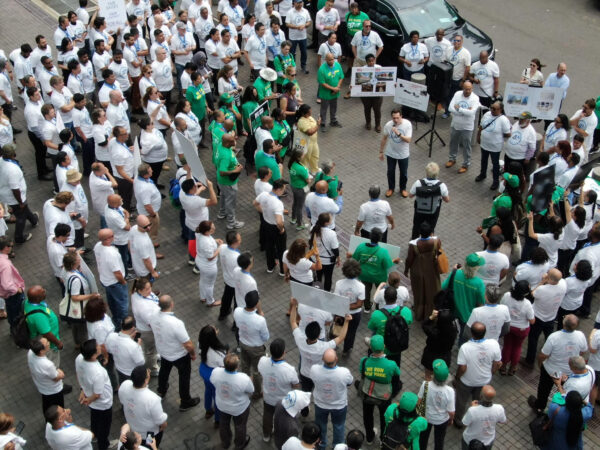
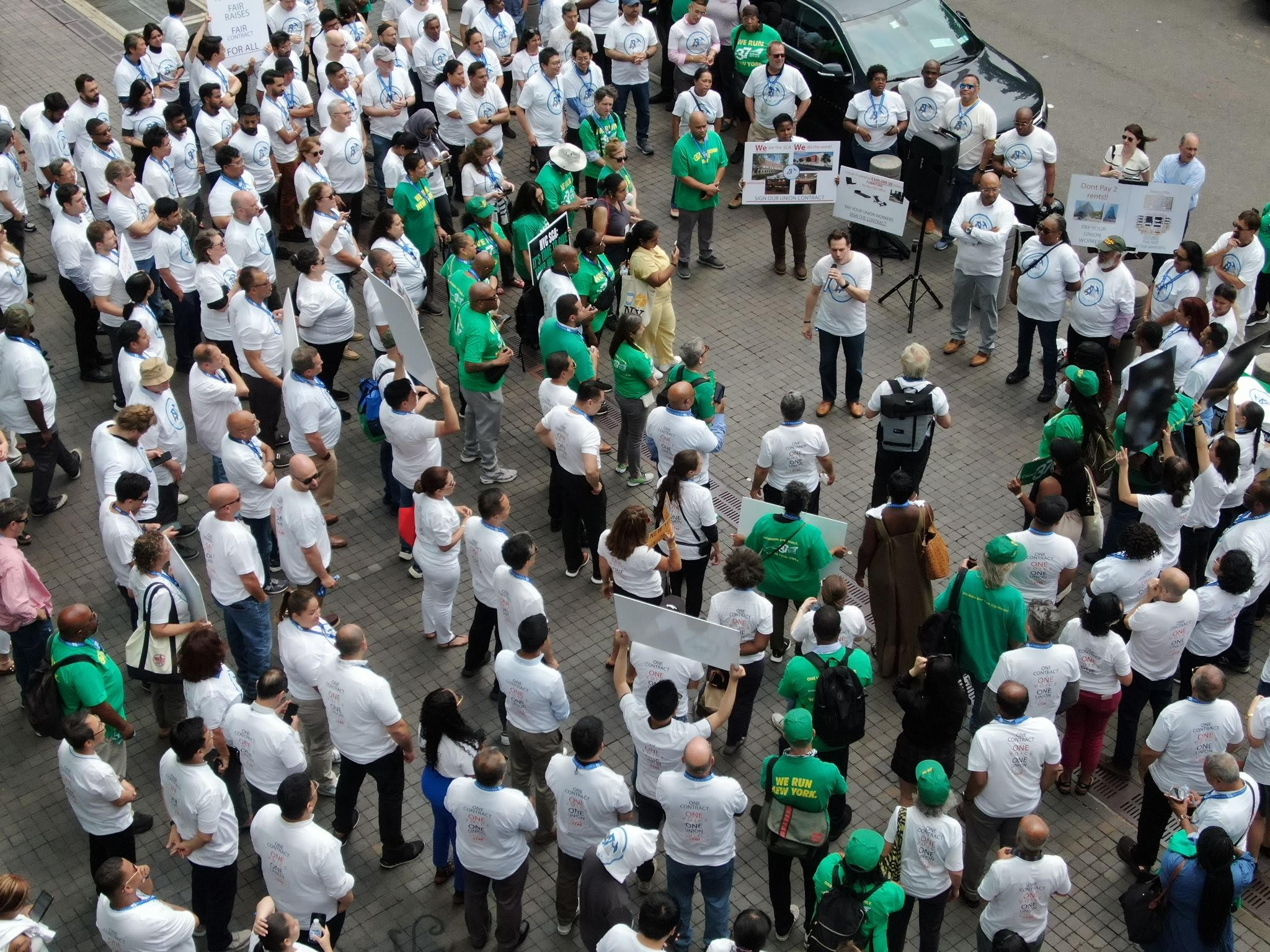
To cheers from the nurses, President Chiarello and about three dozen TWU members and officers visited a crowd of over 200 nurses on Thursday, showing that our 44,000 members have their backs in the strike.
“We know about strikes. We went out in 2005 for three days. And we’re proud of every one of you because you’ve been out for four days,” said Chiarello Thursday outside of NewYork-Presbyterian’s Allen Pavilion on Broadway in upper Manhattan.
“They have millions of dollars for CEOs. When Covid happened, you were here. When they say they don’t have enough, take it out of the piggy bank.”
MaBSTOA VP Donald Yates also addressed the crowd, chanting, “Patients Over Profits! TWU Local 100 Stands with the Nurses!”
“You’ve been on our buses, we’ve been in your hospitals. We’re with you!” said Yates.
Chiarello and other union leaders walked a second picket line Friday at Mount Sinai West, on 10th Avenue between 58th and 59th Streets in Manhattan. At Friday’s action, President Chiarello talked about how union solidarity brings people together who may not even get along at work but who become united when they seek better wages and working conditions.
“This isn’t just a fight for you,” said Chiarello. “This is a fight for the city.”
He also addressed management directly.
“Shame on you, Mount Sinai. We’re not going to work until we get a fair and equitable contract. Because when we fight, we win!”
In negotiations, NYSNA is insisting that management live up to a 2023 agreement that allowed nurses to bring staffing ratio violations directly to arbitration, with an arbitrator able to levy monetary penalties on hospitals for not having enough nurses working on each shift. The money would go to nurses who had worked short-staffed. Management reneged on the agreement. Besides staffing ratios, the major sticking points are health care benefits, workplace violence, and the implementation of Artificial Intelligence