Washington, DC – The IAFF has announced it is taking important steps in the prevention of suicide in the fire service.
The IAFF is training members to recognize warning signs, ask direct questions and encouraging them to step in before it is too late.
Across North America, Locals are adopting suicide prevention programs built for the fire service.
In Washington, D.C., Local 36 recently hosted Columbia Lighthouse suicide assessment training for its peer support team, strengthening a union-led approach to protecting members.
Dan Brong, Local 36’s Peer Team Coordinator, says the mission is simple: saving lives.
Brong explained: “One of the biggest things we found is that once you complete peer support training, you better understand how to handle those moments where you’re thinking what to say or how you should take this phone call.
“It gives you confidence when a member comes to you.”
The Columbia Lighthouse Project uses a short, evidence-based questionnaire to identify suicide risk and determine whether someone needs immediate intervention or follow-up support.
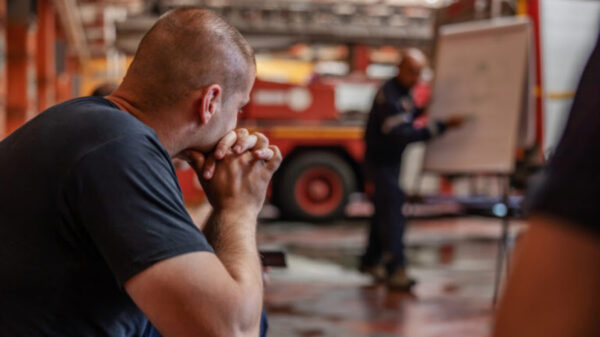
After completing the training, Local 36’s peer team reinforced those skills through extensive role-playing.
Brong continued: “These weren’t abstract situations.
“They were things firefighters actually deal with, like a disgruntled member, a pediatric death or conflict with management.”
Some members role-played while others observed, then offered feedback.
“That feedback mattered. It showed there isn’t one right answer. Experience is the teacher. The more we practice, the better prepared we are.”
That preparation matters most when the call is real – and sometimes personal.
Brong shared his perspective on this: “I’m lucky I’ve only had to ask that question a few times.
“But when you do, it stays with you. You ask, ‘Are you thinking about hurting yourself or committing suicide right now?’
“Sometimes there’s a pause. Sometimes there’s silence.”
Today, more members are willing to speak up and more peers are trained to listen.