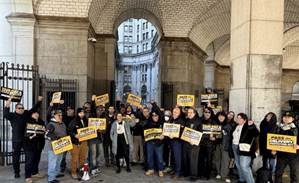
Despite achieving bipartisan supermajority support and gaining the backing of Council Speaker Julie Menin, the Delivery Protection Act has been blocked from receiving an official hearing or floor vote by the NYC Council. Teamsters are demanding that lawmakers bring the legislation to a vote. The landmark bill, authored by Councilmember Tiffany Cabán, would require last-mile delivery facilities to directly hire staff and would effectively ban Amazon’s third-party Delivery Service Partner (DSP) subcontracting model in the city.
“For too long, Amazon has posed an existential threat to the safety of its workers and our neighborhoods,” said Thomas Gesualdi, President of Teamsters Joint Council 16. “This company is using every trick in the book to try to kill the Delivery
Protection Act, but there is nothing they can do to stop the Teamsters.”
The Delivery Protection Act continues to face economic pushback from key business groups. Legislation, 0518, has been sitting in the NYC Council Committee on Consumer and Worker Protection since its hearing in April 2026. Amazon and its allies are lobbying and running major advertising campaigns to block the bill. Behind the scenes, stakeholders are reportedly attempting to negotiate compromises before the legislation is brought to the council for a full vote.
Amazon uses a network of third-party contractors known as DSPs to control workers and avoid legal responsibility for last-mile operations. This model creates dangerous conditions for DSP workers and communities alike. Last year, the New York City Comptroller’s office found that injury rates at last-mile delivery facilities in the city are more than triple the national average for private employers.
The Delivery Protection Act is the only way for New York City to hold Amazon accountable for years of union-busting and endangering workers. The Delivery Protection Act would require companies such as Amazon to directly hire workers at last-mile delivery facilities, making Amazon’s abusive third-party Delivery Service Provider (DSP) model illegal in New York City. The legislation would also ensure that delivery companies abide by higher safety standards and are held responsible for the accidents they cause, addressing working conditions that have led to workers in New York City having triple the injury rate compared to the national average.
Neal Tepel is the publisher of LaborPress.