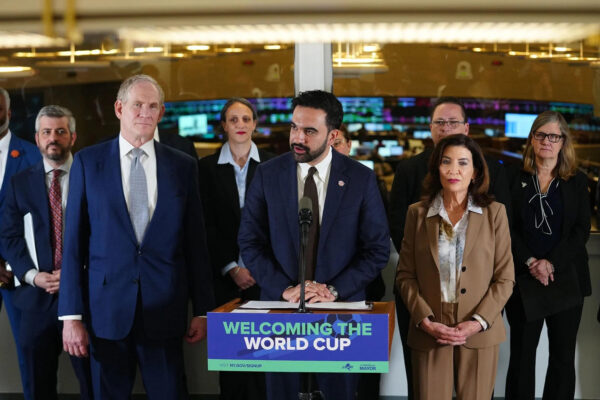
New York, NY – On June 4, 2024 Mayor Zohran Kwame Mamdani and Governor Kathy Hochul outlined sweeping multiagency plans to keep New Yorkers and visitors safe, informed and moving throughout the 2026 FIFA World Cup™.
This press conference was held at the MTA Headquarters at 2 Broadway and focused on transportation, infrastructure and emergency preparedness.
The City and State are coordinating with the NYNJ Host Committee, Metropolitan Transportation Authority (MTA), NJ TRANSIT and the Port Authority of New York and New Jersey (PANYNJ) to direct World Cup-related traffic through designated Midtown Manhattan corridors, helping fans travel to and from matches while minimizing disruptions for New Yorkers.
On match days, dedicated travel corridors will operate along 42nd Street and portions of Fifth and Sixth avenues and 40th and 41st streets. Beginning six hours before kickoff and ending three hours after the final whistle, access will be limited to NYNJ Stadium shuttles, MTA local buses, official World Cup vehicles and emergency response vehicles.
“We have spent months coordinating, drilling and preparing so that when the world arrives at our doorstep, we are ready,” said Mayor Mamdani. “From the first kickoff to the final whistle and long after, our job is clear: keep residents and visiting fans safe, informed and supported during every moment of this busy summer.”
“New York’s transit system safely and reliably moves millions every day, and we are ready to shine on the world stage,” said Governor Hochul. “The World Cup will be a once-in-a-generation event for our state, and whether you’re traveling from Brazil or Bed-Stuy, we have a plan to get you to where you need to go safely.”
The City will designate each match day a “Gridlock Alert Day” to discourage unnecessary driving, limit truck deliveries in Midtown during peak travel periods and encourage both residents and visitors to use public transportation.
NYC DOT will deploy more than 100 staff members throughout Midtown to manage traffic operations. Personnel will coordinate transportation logistics with FIFA, inspect routes, install and remove temporary bus lanes, adjust signal timing in real time and provide travel guidance to the public, drivers, the trucking industry and local businesses.